



OUR CARBON FOOTPRINT & ENERGY USE MONITORING
At Volvic, we measure greenhouse gas emissions across relevant stages of our value chain, monitoring these emissions helps us assess and track our efforts.
UNDERSTANDING AND MANAGING PRODUCT-RELATED EMISSIONS:
As a key step in our sustainability journey, Volvic is transparently calculating its carbon footprint of its products through every stage of their lifecycle.
Some of the steps we have taken include increasing the use of recycled plastic in bottle (excluding cap and label), improving transport efficiency, evaluating lower-carbon transport options, and sourcing renewable electricity for its water bottling site.
VOLVIC CARBON FOOTPRINT & ENERGY USE MONITORING
We have calculated our carbon emissions based on the life cycle assessment from the raw materials we use until the end-of-life of our products. Thanks to this exercise we have identified these 4 main areas to act:
1. Evolving our packaging
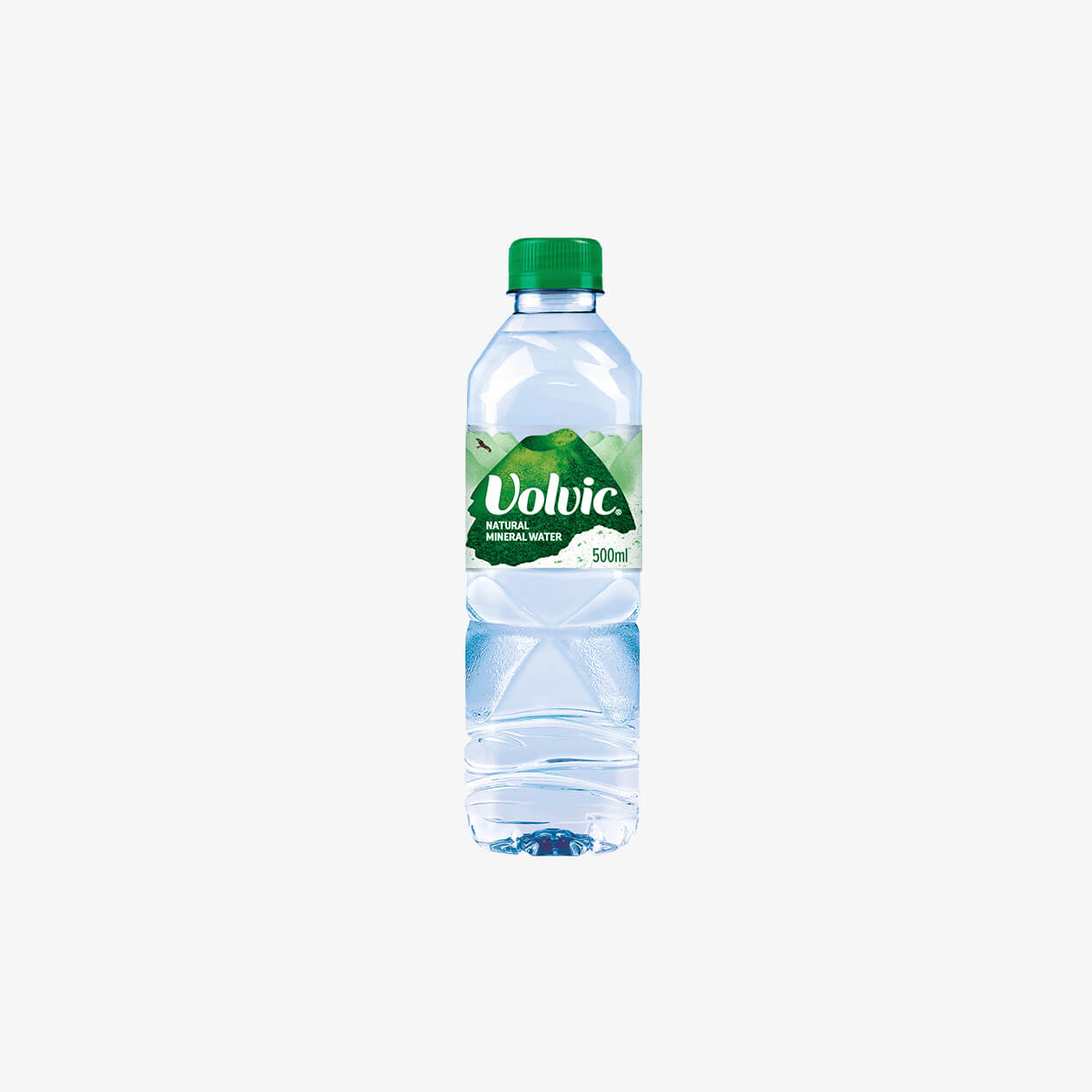
In 2026, through lightweighting, our iconic 1.5L bottle now uses 20% less plastic than it did in 2006 - and we're not stopping there. We moved progressively to bottles made from 100% recycled plastic, excepting cap and label, because such bottle design means 50% less CO2 emissions compared to bottle made from virgin plastic. Since October 2025, every one of our bottles sold in Europe is now made from 100% recycled plastic, excluding cap and label.

2. Responsible transport
Getting our water from source to shelf shouldn't cost the earth. That's why we've been working with our supply chain on lower-carbon transport: today, 78% of Volvic sold in the UK travels from our bottling site by train — producing a carbon footprint up to 10 times lower than the equivalent journey by truck*.
*78% figure based on 2025–2026 internal supply chain data. Carbon footprint comparison calculated using GLEC (Global Logistics Emissions Council) methodology.
3. Energy use
We have gone further on where our energy comes from: since 2020, our natural mineral water bottling process has run on 100% renewable energy, drawn from sources including solar and wind power, plus biogas made from decomposed organic waste.
4. Energy reduction
From 2020 to 2025, we've reduced energy use at our bottling plant by 17% for every litre of natural mineral water and flavoured beverages produced, and every employee at the site is trained to keep finding new ways to use energy more efficiently. That work is recognised with ISO 14001 certification, an international standard for environmental management, which we have held ever since 2008 (re-certified in 2023).